Ayurvedic Treatment for Acidity (Amlapitta): Understanding and Calming Chronic Hyperacidity
That burning sensation in your chest after meals. The sour taste that creeps up your throat. The bloating, the belching, the discomfort that antacids only quiet for a few hours. If this sounds like your daily routine, you are experiencing something millions of working professionals quietly live with — chronic acidity.
For many, antacids become a habit rather than a solution. The relief is temporary, the problem keeps returning, and over time it starts affecting sleep, appetite, and energy. Ayurveda looks at acidity differently — not as something to simply neutralize, but as a signal that your digestive fire and internal balance need attention at the root.
WHAT IS ACIDITY (HYPERACIDITY)?
Acidity, or hyperacidity, occurs when the stomach produces excess acid or when that acid moves upward into the food pipe. This leads to a burning sensation, sour reflux, and discomfort in the upper abdomen and chest.
Occasional acidity after a heavy or spicy meal is normal. But when it becomes frequent — several times a week, or almost daily — it points to a deeper imbalance in how the body is digesting and processing food.
WHAT CAUSES ACIDITY?
Modern lifestyle is one of the biggest contributors. Common triggers include:
- Irregular meal timings and skipping meals
- Excessive spicy, oily, fried, or fermented foods
- Too much tea, coffee, or carbonated drinks
- High stress and inadequate sleep
- Eating late at night or lying down soon after eating
- Excessive alcohol or smoking
- Overuse of certain painkillers and medications
- Eating in a hurried, tense state
Often it is a combination of these, repeated day after day, that turns occasional acidity into a chronic pattern.
COMMON SYMPTOMS TO WATCH FOR
- Burning sensation in the chest or upper abdomen
- Sour or bitter taste in the mouth
- Frequent belching or bloating
- Nausea, especially after meals
- A feeling of heaviness or discomfort after eating
- Burning in the throat or acid coming up
- Reduced appetite or disturbed sleep due to discomfort
If you experience severe pain, difficulty swallowing, unexplained weight loss, or vomiting, seek prompt medical evaluation.
THE AYURVEDIC UNDERSTANDING OF ACIDITY (AMLAPITTA)
In classical Ayurveda, acidity is understood as Amlapitta — literally, "sour Pitta." It reflects an aggravation of Pitta dosha and a disturbance in the digestive process. Rather than viewing it as isolated acid production, Ayurveda examines why the digestive system has become imbalanced.
The Role of Dosha: Pitta governs heat, metabolism, and digestion. When aggravated by spicy, sour, or fermented foods, stress, anger, heat, and irregular routines, Pitta becomes sharp and excessive, producing the burning, sourness, and reflux typical of acidity.
The Role of Agni: Agni is the digestive fire. In acidity, Agni becomes disturbed — often sharp and irregular rather than balanced. This vitiated digestive fire fails to process food properly and generates excess heat and acidity in the system.
The Role of Ama: When digestion is disturbed, the body produces Ama — a sticky, undigested residue. Ama can combine with aggravated Pitta, worsening the sourness, heaviness, and blocked feeling that accompany chronic acidity.
HOW AYURVEDA APPROACHES ACIDITY
Ayurvedic care for acidity is personalized, not a one-size-fits-all remedy. The aim is to pacify aggravated Pitta, restore balanced Agni, clear Ama, and soothe the digestive tract — while correcting the diet and lifestyle habits that created the problem.
Depending on individual assessment, a physician may consider cooling and soothing herbal medicines, dietary correction, and, where appropriate, classical Panchakarma therapies such as Virechana (therapeutic purgation), which is traditionally regarded as a primary measure for Pitta-related conditions. The right approach, combination, and duration vary from person to person, and outcomes vary based on individual condition and consistency.
Authentic care begins with understanding the individual. Through Nadi Pariksha (pulse assessment) and detailed history-taking, a physician evaluates the state of Pitta, Agni, and Ama — allowing medicines and therapies to be customized rather than generalized.
LIFESTYLE CONSIDERATIONS
- Eat meals at regular, consistent times and avoid skipping meals
- Avoid lying down for at least 2–3 hours after eating
- Finish dinner early rather than eating late at night
- Manage stress through pranayama, meditation, and adequate sleep
- Avoid eating in a hurried or tense state
- Reduce excessive tea, coffee, and carbonated drinks
- Maintain a consistent daily routine (dinacharya) to support digestion
DIET CONSIDERATIONS
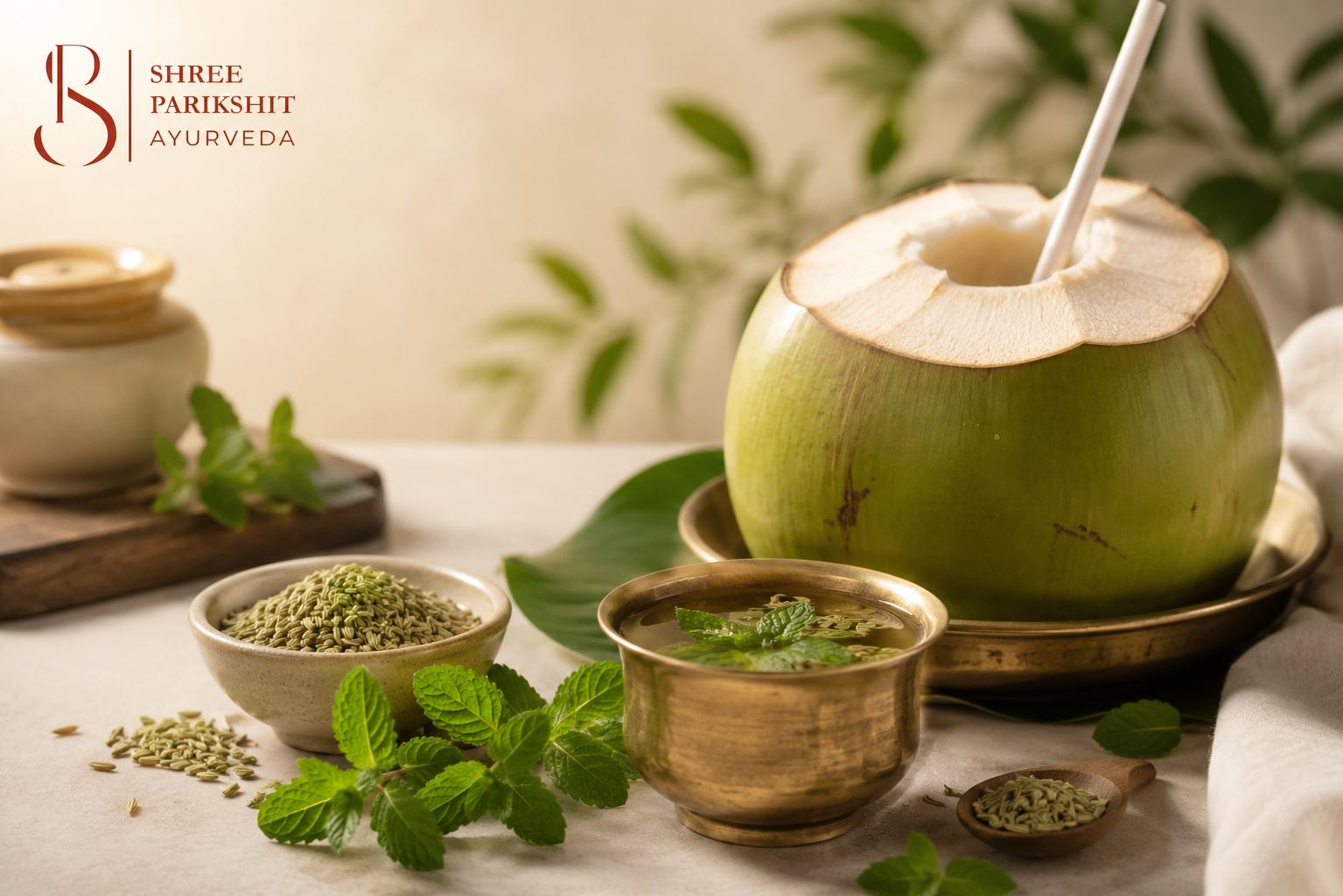
Because Pitta and Agni are central, diet is a cornerstone of managing acidity. Generally favoured: cooling, easily digestible foods; adequate water; naturally soothing options such as coconut water, and cooling foods that are gentle on the stomach; and warm, freshly cooked simple meals. Generally discouraged: excessively spicy, oily, fried, sour, and fermented foods, along with excessive caffeine and alcohol, which aggravate Pitta. Any diet plan should be tailored to the individual through consultation.
WHEN TO SEEK A CONSULTATION
It is wise to seek professional Ayurvedic care when:
- Acidity occurs frequently, several times a week or daily
- You are relying on antacids regularly to get through the day
- Symptoms are disturbing your sleep, appetite, or work
- You experience recurring reflux, nausea, or throat burning
- Diet changes alone are not giving lasting relief
Early, guided intervention generally supports better long-term outcomes and helps address the root cause rather than only the symptom.
SUMMARY
Chronic acidity is more than an occasional inconvenience — it is a sign that your digestion and internal balance need attention. Ayurveda understands acidity as Amlapitta, rooted in aggravated Pitta, disturbed Agni, and accumulated Ama. Rather than only neutralizing acid, it offers a personalized, root-cause approach combining cooling herbal medicines, dietary correction, lifestyle change, and, where suitable, classical Panchakarma. With authentic, doctor-led care and consistent effort, many people are able to support meaningfully better digestive comfort. Individual outcomes vary, and a personal consultation is the right starting point.
At Shree Parikshit Ayurveda – Clinic & Panchakarma Centre, Sector 56, Gurugram, Dr. Bharpur Singh offers personalized, consultation-based Ayurvedic care for acidity and digestive concerns.
FREQUENTLY ASKED QUESTIONS
Can Ayurveda help with chronic acidity?
Ayurveda offers a personalized, root-cause approach that traditionally aims to balance Pitta, restore healthy digestion, and soothe the digestive tract through medicines, diet, and lifestyle changes. Outcomes vary by individual.
What is acidity called in Ayurveda?
Acidity is understood as Amlapitta, meaning "sour Pitta," reflecting an aggravation of Pitta dosha and disturbed digestion.
Which dosha causes acidity?
Acidity is primarily a Pitta-related condition, as Pitta governs heat, metabolism, and digestion.
What is Virechana and how does it relate to acidity?
Virechana is a classical Panchakarma therapy of therapeutic purgation, traditionally regarded as a primary measure for Pitta-related conditions. Its suitability is determined by a qualified physician.
Which foods should I avoid with acidity?
Excessively spicy, oily, fried, sour, and fermented foods, along with excessive caffeine and alcohol, generally aggravate Pitta and are best limited.
Why does my acidity keep coming back even with antacids?
Antacids may neutralize acid temporarily but do not address the underlying imbalance in Pitta, Agni, and lifestyle. A root-cause approach aims to reduce recurrence.
Is acidity linked to stress?
Yes, high stress and inadequate sleep can aggravate Pitta and disturb digestion, making acidity more frequent.
Can acidity be managed at home?
Diet and lifestyle changes help significantly at home, but frequent or persistent acidity is best assessed through a doctor-led consultation for personalized care.
ABOUT THE AUTHOR
Dr. Bharpur Singh — BAMS, MD (AM) is the lead Ayurvedic physician at Shree Parikshit Ayurveda, Clinic & Panchakarma Centre in Sector 56, Gurugram. With over 7 years of clinical experience, he specializes in authentic, classical Ayurveda — combining Nadi Pariksha, customized medicines, and classical Panchakarma to deliver personalized, doctor-led care.
Medically reviewed by Dr. Bharpur Singh [BAMS, MD(AM)]. This article is for educational purposes and is not a substitute for personalized medical advice. Please consult a qualified physician before beginning any treatment. Individual outcomes vary.
Struggling with frequent acidity or reflux? Book an Ayurvedic consultation with Dr. Bharpur Singh at Shree Parikshit Ayurveda, Sector 56, Gurugram.